How to Achieve Occupancy Stabilization Beyond Peak Season
Tímea Pokol
3 min read
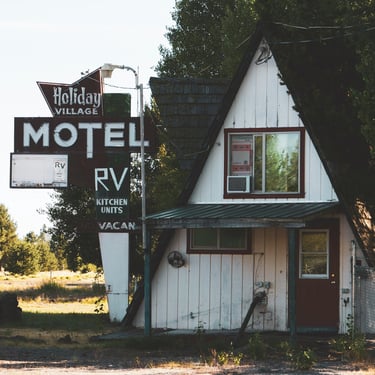
The decision-maker pauses in the corridor, not yet ready to enter the office. Through the glass, the destination looks composed. Rooms are prepared. Staff move with practiced ease. A few arrivals roll their suitcases across the floor, the sound soft, almost polite. This is not the rush of peak season, but it is not emptiness either.
On the dashboard, occupancy is “acceptable.” Not impressive, not alarming. The kind of number that rarely sparks conversation.
Everything seems to be working.
And yet, there is a faint sense of imbalance, like a table that stands firm but wobbles when leaned on. The place feels dependent—strong when demand arrives, fragile when it leaves. As if stability were something borrowed from the calendar rather than built into the destination itself.
Nothing is broken. Nothing urgent needs fixing. Still, the question lingers: Why does occupancy feel reliable only when the season does the heavy lifting?
This is not a crisis — yet.
It is the space before one forms.
Occupancy stabilization beyond peak season is often discussed as a tactical challenge. More promotions. More packages. More reasons to come now instead of later. The logic is straightforward: if rooms are empty, stimulate demand. If demand hesitates, lower the barrier.
These interventions work—briefly. They create motion. They fill gaps. But motion is not the same as balance.
In destination development, stability is rarely the result of pressure. It emerges from alignment. When what is offered, when it is offered, and how it is valued begin to reinforce one another, occupancy stops behaving like a wave and starts behaving like a tide.
Season extension in tourism is frequently imagined as stretching the peak—pulling its shape across more weeks, more months. But peaks resist stretching. They thin out. What remains is often a diluted version of the same experience, sold with greater effort and smaller margins.
Guests sense this. Even if they cannot articulate it, they feel when a destination is waiting for its “real” season to return. The energy changes. The promise softens.
Tourism revenue optimization, in this context, becomes a form of constant adjustment. Prices rise and fall in response to demand signals, but the underlying proposition remains unchanged. Occupancy is managed, not stabilized. Encouraged, not grounded.
True stabilization begins elsewhere.
It begins with the acceptance that different seasons are not problems to solve, but conditions to design for. A destination that expects the low season to behave like the high season is destined to be disappointed by both.
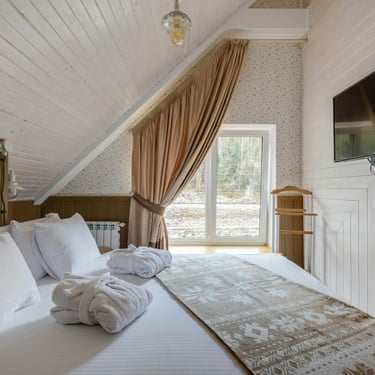
Experience portfolio development is not about adding attractions to fill a void. It is about revealing aspects of the destination that already exist but have been overshadowed by abundance. In quieter months, space becomes an asset. Silence becomes a feature. Time slows, and with it, attention deepens.
These qualities cannot be discounted into existence. They must be named, framed, and protected.
Low season management, when approached strategically, reshapes occupancy from the inside out. Instead of asking how many rooms can be sold, it asks to whom and for what purpose. The audience shifts. The rhythm changes. Length of stay often matters more than volume. Fewer guests, arriving with clearer intent, can stabilize occupancy more effectively than many arriving reluctantly.
Stabilization, then, is not about flattening demand. It is about diversifying it.
When a destination offers distinct seasonal identities—each coherent, each valuable—occupancy begins to spread naturally. Not evenly, but meaningfully. Guests return at different times, not because prices are lower, but because the experience is different.
This requires restraint.
Not every room must be filled every night to be healthy. Chasing absolute occupancy often erodes the very qualities that make off-peak periods attractive. Overactivation can feel like desperation. Under-curation feels like neglect. Stability lives between these extremes.
Pricing plays a role, but not as a blunt instrument. Structural pricing supports stabilization by signaling confidence. It tells the market that value persists, even when pace slows. Tactical discounts may still appear, but they no longer define the season. They serve the strategy, rather than replace it.
Over time, something subtle shifts. Occupancy stops spiking and collapsing. It breathes. Staff engagement steadies. Local partners remain active. The destination no longer needs to “wake up” each year—it remains present.
Back in the corridor, the decision-maker finally steps inside. There will be meetings, forecasts, adjustments. Peak season will come again, as it always does. But the quieter months no longer feel like something to endure.
Occupancy stabilization beyond peak season is not achieved by convincing the calendar to behave differently. It is achieved by allowing each season to carry its own reason for being.
When that happens, stability is no longer something hoped for.
It is something the destination quietly inhabits.




© 2026. All rights reserved.
Tímea Pokol
Tourism Recovery & Strategy Specialist
Strategic tourism consultancy helping accommodation businesses improve revenue performance and experience design.
Company
Contact
Terms & Conditions
Privacy Policy
MarLocker S.L.
C/Honda 1,
04450 Canjáyar
Almería
Spanyolország
NIF: ESB22689137