How to Stabilize Tourism Revenue in Low Season
Tímea Pokol
4 min read
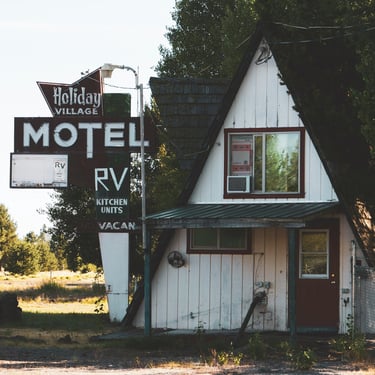
The owner stands in the doorway of the reception at 6:47 a.m., keys still in hand, listening to the building breathe. In peak season the lobby is a river - voices, luggage wheels, sunburnt laughter, the soft panic of last-minute requests. Today it is a pond. A single lamp glows. Outside, the street is clean in the way only quiet months can make it, as if the destination is saving its energy.
Nothing looks wrong. The year was good. High season carried its promise. Reviews were kind. Partners were satisfied. The spreadsheets show that the property did what it was supposed to do. And yet, the owner’s gaze keeps returning to the long pale stretch of weeks ahead, those blank spaces that always arrive with menace.
This is not a crisis - yet.
It is the moment when a destination can choose to become sturdier than its calendar.
Most low seasons are managed like winter coats: pulled out when needed, tolerated, then put away. The reflex is understandable. When demand softens, the first instinct is to lower the price, make noise, chase occupancy, light up the quiet with “limited time” urgency. It works, sometimes. It also teaches the market a lesson that is hard to unteach: wait long enough and the destination will negotiate against itself.
Stabilizing revenue in low season begins with a different kind of courage. Not the loud courage of campaigns, but the quiet courage of structure. It asks the owner to stop treating the low season as absence and start treating it as a different climate. In a changing travel world—one that moves at the speed of culture and emotion, where expectations follow moments rather than business cycles, as described in a destination cannot rely on a single season to define its value.
This is where destination development begins to drift into view, like a shoreline appearing through fog. Development is not only about buildings or branding; it is about the relationship between place and promise. The low season exposes that relationship because it removes the crowd’s applause. What remains is the core experience, unamplified. If the core is coherent, the quiet becomes an asset. If it is vague, the quiet becomes a warning.
Season extension in tourism is often imagined as stretching summer across the year, but summer does not stretch well. It frays. The better question is not “How do we make more of the same?” but “What does this season allow that the peak season cannot?” Low season has its own virtues: space, attention, intimacy, slower mornings, longer conversations, the luxury of not competing for a table or a view. Stabilization comes when those virtues are designed, named, and protected.
Tourism revenue optimization can sound like a machine’s language, but in practice it is a human art: aligning what you offer with what people truly value, and signaling that value without apology. A half-full house with longer stays, higher attachment, and steadier spending can be healthier than a full house bought with discounts and exhaustion.
Here the mind needs compression, not expansion. Think in portfolios, not promotions. Experience portfolio development means assembling a set of reasons to come that do not all bloom in the same month. Some experiences are solar—bright, communal, designed for abundance. Others are lunar—quiet, reflective, designed for scarcity. A portfolio that contains both can breathe across the year.
Low season management, then, is less about austerity and more about choreography. It starts with choosing the right guest for the right season. Not every audience is a low-season audience, and that is fine. People who travel in quiet months are often buying something different: restoration, focus, depth, a sense of belonging. They do not need fireworks; they need a place that respects silence.
Practical moves follow, but they should feel like consequences of identity, not tricks. Create length-of-stay gravity: experiences that unfold over three nights instead of one, rituals that reward lingering, small surprises that make time feel generous. Build partnerships that are season-native: farmers, makers, guides, wellness practitioners, storytellers—people whose work already aligns with the slower tempo. Convert fixed costs into flexible rhythms where possible, not by shrinking the experience, but by adjusting the stage: fewer zones open, warmer focal points, a smaller footprint that feels intentional rather than abandoned.
Pricing, too, must become a form of narrative. Instead of blanket discounting, use structure: value windows that reward planning, not procrastination; bundles that protect margin by adding meaning rather than subtracting price; anchors that signal confidence even when demand is soft. A destination can be inviting without being cheap. It can be quiet without being empty.
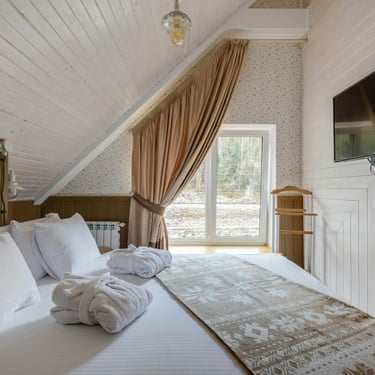
Marketing in low season should read like a letter, not a megaphone. Speak to the person who is tired of crowds, not the person who is addicted to them. Show the texture of the season: the way light falls earlier, the taste of local soup, the sound of rain on a roof that is not shared with a hundred strangers. When the story is specific, the right demand finds it.
And then there is the internal season, the one guests do not see. Use quiet months to strengthen the organism: train teams, refine service rituals, repair what peak season bruised, improve the guest journey where friction hides, build systems that learn continuously. Stability is often built in maintenance, the unglamorous work that makes a place feel effortless when it matters.
Eventually, the blank weeks on the calendar stop looking like a threat and start looking like a canvas. The destination does not try to become summer in winter. It becomes itself in winter.
The owner takes off their coat and turns on a second light. The lobby brightens, not dramatically, just enough. In low season, revenue is stabilized not by fighting the quiet, but by giving the quiet a shape. And once it has a shape, it no longer feels like something to survive alone.


© 2026. All rights reserved.
Tímea Pokol
Tourism Recovery & Strategy Specialist
Strategic tourism consultancy helping accommodation businesses improve revenue performance and experience design.
Company
Contact
Terms & Conditions
Privacy Policy
MarLocker S.L.
C/Honda 1,
04450 Canjáyar
Almería
Spanyolország
NIF: ESB22689137