Occupancy Stabilization Strategies for Rural Hotels
Tímea Pokol
5 min read
The owner didn’t notice the pattern in the booking engine. He noticed it in his body.
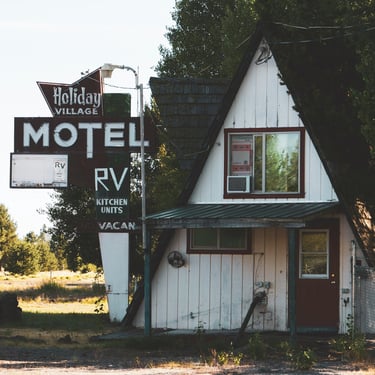
It arrived the same way every year: a tightening in late September, a hollowing in November, a small relief in December that never quite felt like relief. The property was still standing, still loved by the guests who came, still praised in reviews written with the warmth of weekend escape. The building looked the same in every photograph—stone, timber, clean beds, a breakfast that made people say “authentic.” From the road, nothing suggested a problem. If anything, it looked like the kind of place you’d trust.
And yet, he kept finding himself staring at the same calendar, like a farmer studying a sky that had started to lie.
There were months when the hotel sold itself. The rural air did its own marketing. The landscape carried the brand. People arrived with that bright, peak‑season energy, as if the world had been waiting for them to take a break. Then there were months when the hotel felt like a radio with the volume turned down—still on, still functioning, but reaching fewer and fewer ears. In those stretches, every booking felt like a small miracle, and every cancellation felt personal.
On paper, there was no crisis. Occupancy wasn’t disastrous. Revenue wasn’t collapsing. The destination still had a pulse. If someone asked how business was going, he could honestly say: fine. Working. Stable enough.
But “stable enough” has a sound in rural hospitality, and it isn’t comfort. It’s the sound of a system repeating itself.
This is not a crisis — yet.
In rural hotels, the real danger rarely enters with a dramatic headline. It enters with acceptance. With the quiet belief that low season is simply what it is, that it must be endured like frost on the fields. Over time, the business begins to organize itself around that belief. Staffing becomes defensive. Investment becomes cautious. Plans become short. The hotel develops the reflex of waiting—waiting for the next weekend, the next holiday, the next peak moment that will make the numbers feel alive again.
Occupancy stabilization strategies are often described as tactics: campaigns, discounts, last‑minute offers, a louder social media voice. Those things can move the needle for a week, sometimes for a month. But rural hotels don’t suffer because they lack noise. They suffer because they lack rhythm. The year has been allowed to become a single beat: loud‑quiet, loud‑quiet, like a heart that never learns to rest between pulses.
Stabilizing occupancy in a rural hotel is not the same as filling rooms. Filling can be forced. Stabilizing has to be built.
At some point, if you listen closely enough, the property will tell you where the imbalance lives. It lives in the way the destination is imagined—often as a place that “comes alive” only in certain seasons. It lives in the way the experience is framed—often as a single promise repeated: peace, nature, escape. It lives in the way value is distributed—often concentrated into a few profitable weeks that must carry the year like a person carrying water in a cracked vessel.
That crack is where the professional language starts to drift in, not as jargon, but as a flashlight. Destination development is the word for what happens when a place chooses to become more than its peak‑season identity. It’s the difference between “We are beautiful in summer” and “We are meaningful in every season, for different reasons.” Without that choice, rural hotels remain prisoners of the weather, the school calendar, and the habits of urban life.
And then there is season extension in tourism, a phrase that sounds optimistic until you treat it like engineering. Season extension is not a slogan. It is not something you announce. It is something you design—through reasons to arrive when people don’t already feel like arriving. Not just “come anyway,” but “come because this is when the destination offers something it cannot offer in July.”
This is the core of tourism revenue optimization, too, though many owners are taught to think revenue optimization is a pricing conversation. Pricing matters, yes—but in rural hotels, pricing is often the last domino. Revenue is optimized when demand stops arriving in one heavy wave and starts flowing in smaller, more predictable currents. When the hotel isn’t forced to earn an entire year in a few weekends. When the business model stops treating low season like a void and begins treating it like a different room in the same house.
Most rural hotels already have the raw materials for stabilization. They have quiet. They have space. They have local producers and traditions that don’t disappear when the leaves fall. They have stories that feel truer when the destination is not performing for crowds. But raw materials do not automatically become structure. A rural hotel can be “charming” for years and still be structurally fragile.
That fragility often hides inside what looks like variety. A hotel adds a tasting event, a workshop, a small wellness feature, an outdoor package. Each addition is sensible in isolation. But isolated additions can become clutter. They create movement, but not direction. Guests sense this unconsciously: many offers, no clear reason. Many activities, no coherent promise. Many pieces, no shape.
This is why experience portfolio development matters—because it turns experiences from scattered ideas into an arranged composition. A portfolio is not a list. It’s a system of roles. Some experiences are anchors: they justify the trip itself. Some are bridges: they make shoulder seasons feel like the right time to come. Some are enhancers: they deepen the stay without carrying the weight of demand. When rural hotels treat experiences as a portfolio, they stop throwing sparks into the dark and start building a fire that lasts.
And that’s where low season management stops being a mood and becomes a strategy. Low season management is not “how to sell rooms when nobody wants them.” It is “how to change what the season means.” Sometimes that means shifting the guest type. Sometimes it means shifting the length of stay. Sometimes it means shifting the way time is packaged—two nights become three when the third night has purpose. Sometimes it means building partnerships that make the destination feel complete rather than lonely: a winter table with local producers, a slow‑travel itinerary curated with someone who actually lives there, a ritual the destination can own because it is not competing with summer’s noise.
Occupancy stabilization is also about what the hotel refuses to become. Many rural properties are tempted to survive by becoming cheaper, louder, broader. But stabilization rarely comes from dilution. It comes from precision. From knowing who the hotel is for in November. From articulating a reason that doesn’t sound like apology. From creating a value proposition that doesn’t depend on a discount to feel convincing.
This is where owners often realize something unsettling: the most expensive part of low season isn’t empty rooms. It’s the way emptiness forces the business into short‑term thinking. It teaches the hotel to chase rather than to design. It turns strategy into reaction.
The best occupancy stabilization strategies feel almost boring when they start working. Not boring in the sense of dull, but boring in the sense of calm. The calendar becomes less dramatic. Weekends stop being the only lifeline. Staff planning stops feeling like gambling. Revenue behaves less like weather and more like climate—still seasonal, still alive, but no longer violent.
From the outside, nothing looks revolutionary. The building doesn’t change. The rural road still curves the same way. The view is still the view.
But inside, the hotel stops holding its breath.
And that is perhaps the clearest sign that you have moved beyond tactics. Not into a campaign. Not into a miracle. Into a structure that can carry the year without asking peak season to save it every time.


© 2026. All rights reserved.
Tímea Pokol
Tourism Recovery & Strategy Specialist
Strategic tourism consultancy helping accommodation businesses improve revenue performance and experience design.
Company
Contact
Terms & Conditions
Privacy Policy
MarLocker S.L.
C/Honda 1,
04450 Canjáyar
Almería
Spanyolország
NIF: ESB22689137