Season Dependency Risk in Rural Accommodation
Tímea Pokol
3 min read
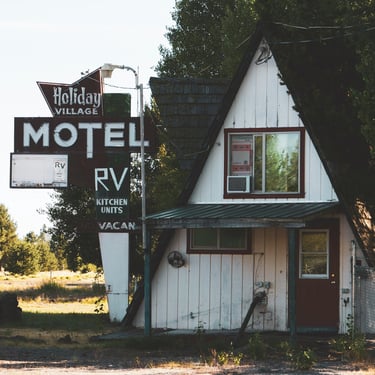
The owner unlocks the door a little later than in summer.
The gravel crunches louder in the stillness, as if the land itself notices the delay. Inside, the rooms are clean, ready, unchanged. Outside, the fields rest under a pale sky, neither hostile nor inviting—simply waiting.
The booking calendar is open on the desk. A handful of reservations dot the coming weeks. Enough to justify staying open. Enough to say, we’re operating. The phone is quiet. The silence is familiar.
At first glance, nothing is wrong.
Peak season was good. Better than last year, even. Guests praised the calm, the authenticity, the feeling of “real life.” Reviews mention sunsets, homemade breakfasts, long conversations. The kind of success rural accommodation is built on.
And yet, the quiet months arrive like a question that never quite gets answered. The same pattern repeats. Energy drains slowly. Fixed costs remain stubborn. People—staff, partners, even the owner—shift into waiting mode.
The place survives. But it does not breathe.
This is not a crisis — yet.
It is risk in its most patient form.
Season dependency risk in rural accommodation rarely announces itself dramatically. There are no sudden collapses, no overnight closures. Instead, it settles in gently, disguised as tradition. This is how it’s always been. Summer carries the year. Autumn tapers. Winter endures. Spring hopes.
Rural destinations are especially vulnerable to this rhythm because their strength is also their fragility. They are rooted in landscape, weather, agriculture, and silence. These qualities draw people powerfully—at specific times. Outside those times, the same qualities are often treated as obstacles rather than assets.
In destination development, rural accommodation is often positioned as seasonal by nature, as if dependency were an inherent trait rather than a design choice. The logic seems reasonable: people travel to the countryside when the countryside looks like a postcard.
But postcards flatten reality.
Season extension in tourism, when applied to rural contexts, often tries to correct this by importing momentum. Festivals. Themed weekends. Discounted stays. Short bursts of noise meant to wake the land from its slumber. Sometimes they work. More often, they exhaust the place without changing its underlying dependence.
Tourism revenue optimization follows suit. Prices rise confidently in high season, then slide quietly in low months. Discounts become a language of apology. Sorry it’s not summer. Sorry the days are shorter. Sorry the fields are bare.
Over time, the market learns the lesson being taught: wait.
Season dependency risk is not simply about uneven cash flow. It is about identity erosion. When a rural accommodation only feels legitimate during peak months, everything else becomes provisional. Investment decisions stall. Staff engagement thins. Partnerships weaken. The destination becomes something that exists fully only part of the year.
This risk deepens because it feels manageable—until it isn’t.
The real shift begins when the question changes from How do we survive the low season? to What is this season actually good for?
Experience portfolio development is often misunderstood as adding activities. In rural accommodation, it is more about revealing layers. The land does not stop offering experiences when the weather cools; it simply changes its vocabulary.
In summer, the countryside speaks in abundance. In winter, it whispers. Long walks without destination. Evenings that stretch. Meals that take time because there is nowhere else to be. These are not diluted experiences. They are different ones.
Low season management, approached with intention, is less about occupancy targets and more about coherence. Who is this place for when it is quiet? What kind of guest is not escaping the city, but seeking space? What kind of stay is not about activity, but about rhythm?
Rural accommodations that reduce season dependency do not try to be busy year-round. They try to be meaningful year-round.
This often requires resisting the urge to overcorrect. Not every empty room is a failure. Not every quiet week demands stimulation. Some guests are drawn precisely to what others interpret as absence.
Pricing, in this context, becomes an act of confidence rather than desperation. Structural pricing signals that value does not evaporate with sunlight. Tactical discounts may still appear, but they are no longer the foundation. The story leads; the numbers follow.
As this shift takes place, subtle changes emerge. Length of stay increases. Guests arrive with intention instead of hesitation. Word-of-mouth changes tone. The accommodation is no longer described as “great in summer” but as “different, depending on when you go.”
This is where risk begins to loosen its grip.
Season dependency risk thrives on monotony—on the idea that there is only one correct version of the destination. Resilience grows when plurality is allowed. When seasons are not ranked, but interpreted.
For rural accommodation, this interpretation must remain honest. The countryside cannot compete with cities on stimulation, nor should it try. Its strength lies in offering what urban life withholds: continuity, slowness, and a sense of place that does not rush to perform.
Back at the desk, the owner closes the booking calendar. Outside, the land remains unchanged. No guests arrive today. That is fine.
What matters is that the destination no longer feels like it is waiting to become itself again. It already is.
Season dependency risk does not disappear when demand evens out. It disappears when identity does.
When a rural accommodation learns to stand in every season without apology, it stops borrowing its stability from summer. And in that quiet confidence, risk gives way—not to growth, but to balance.




© 2026. All rights reserved.
Tímea Pokol
Tourism Recovery & Strategy Specialist
Strategic tourism consultancy helping accommodation businesses improve revenue performance and experience design.
Company
Contact
Terms & Conditions
Privacy Policy
MarLocker S.L.
C/Honda 1,
04450 Canjáyar
Almería
Spanyolország
NIF: ESB22689137