#27 Hotel Positioning Strategy: Increase Profitability Without Discounting
Tímea Pokol
5 min read
Hotel Positioning Strategy: Increase Profitability Without Discounting
Renovation does not fix weak demand. It only makes weak demand look more expensive. A hotel positioning strategy is the structural decision that determines who you serve, why they choose you, and what they pay—especially outside peak months. If your revenue still depends on the same short season after a refurbishment, the issue was never the furniture. It was the business model.
Featured Snippet Block: A hotel positioning strategy increases profitability by defining a clear target guest, a compelling value promise, and a structured experience that justifies pricing. Instead of relying on discounts or renovations, hotels can improve revenue by increasing perceived value, extending stays, and reducing price comparison through experience-based hospitality.
What Is a Hotel Positioning Strategy (and Why It Matters)?
What is a hotel positioning strategy in simple terms? It is the deliberate choice of a specific guest segment + a specific promise + a specific experience sequence that justifies your rate. It is not your design style, your logo, or your Instagram feed. It is the economic logic that makes your hotel the obvious choice for a defined buyer.
Most hotels confuse “looking better” with “being chosen more.” Positioning answers a harder question: What job does the guest hire your hotel to do and why are you the best option to do it? When you cannot answer that, you default to visible activities (renovation, rebranding, new photos) because strategy is less tangible.
Why Most Hotels Fail at Positioning
Hotels fail because they try to be broadly appealing. Broad appeal produces broad competition. Broad competition forces price comparison. Price comparison destroys margin. A strong positioning narrows the buyer, clarifies the promise, and builds demand where the market is quiet.
Practical application:
Diagnose the real constraint: low-season demand, weak midweek, short length of stay, or rate resistance.
Choose one primary segment you can win (not three you can “also serve”).
Build an experience sequence that solves that segment’s problem from arrival to departure.
Align revenue mechanics (rate fences, packages, upsells, minimum stays) to that sequence.
This is the structural work most hotels skip—and it’s why renovations produce only temporary lifts.
How to Increase Hotel Profitability Without Discounting
How to reduce price competition in hotels? You increase hotel profitability without discounting by raising perceived value, not lowering price. Discounting only accelerates bookings from price-sensitive guests who are least loyal and most costly to satisfy. It compresses ADR, trains your market to wait, and makes your next season harder.
The non-obvious truth: discounts are not a demand strategy. They are a panic response to unclear value. Instead, use controlled value increases:
Build “decision shortcuts” that make choosing easier than comparing.
Add structured inclusions that are low-cost to you but high-value to the guest.
Improve conversion and length of stay by bundling outcomes, not amenities.
A package is not a discount. A package is a decision shortcut that reduces hesitation and price comparison. What this looks like in real operations:
Replace “10% off” with “two-night recovery sequence” (late checkout, thermal access window, sleep kit, breakfast priority).
Fence value by time and behavior (midweek, Sunday–Tuesday, arrival-time perks) rather than by lowering rate.
Use experience-based hospitality to justify premium pricing during low-demand periods, not just peak dates.
How Guest Experience Directly Impacts Hotel Revenue
How does guest experience affect hotel profitability? Guest experience affects hotel revenue because it determines rate acceptance, length of stay, upsell take-rate, and review velocity. Experience is not “service.” It is a revenue system that shapes willingness to pay.
Hotels often treat the guest journey as a hospitality obligation. That is a mistake. The guest journey is a commercial engine:
If the experience is vague, guests compare price.
If the experience is sequenced and outcome-based, guests compare alternatives less.
If the experience creates a story worth repeating, reviews rise and acquisition costs fall.
Expert insight: guest experience is a revenue system, not a service. A hotel that “serves well” but does not design the experience is leaving money on the table. Guests do not pay for effort. They pay for clarity, outcomes, and emotional payoff.
Real hotel application:
Map the experience sequence: pre-arrival → arrival → first hour → evening → morning → departure.
Identify where revenue leaks: decision fatigue, weak first-hour impact, poor evening purpose, no reason to extend.
Turn existing services into sellable experiences instead of listing amenities and hoping guests self-assemble meaning.
This is where hotel revenue optimisation becomes practical. Revenue is not only distribution and pricing. It is experience design that supports pricing.
Hotel Low Season Strategy: How to Build Demand Without Discounts
How to increase hotel revenue in low season without discounting? A low season strategy is effective when it changes who travels, why they travel, or how long they stay without relying on discounts. The goal is not to “make low season busy.” The goal is to build dependable pockets of demand that make your annual P&L less seasonal.
Here are structural ideas that actually work:
Shift from leisure to purpose. Low season is when “purpose trips” win: recovery, focus, reconnection, learning, nature rituals, micro-retreats.
Engineer midweek demand. Midweek is often your real profitability gap. Build Monday–Thursday value that does not exist elsewhere.
Create stay extension triggers. A second night is usually more profitable than a new booking because acquisition cost is already paid.
Develop segment-specific offers. “Couples” is not a segment. “Couples needing sleep recovery after burnout” is closer to a segment.
Most hotels never solve low season because they refuse to choose a buyer. They keep chasing “everyone.” Low season punishes that approach.
How to Design High-Converting Experience Packages for Hotels
Experience package design for hotels works when they package an outcome, not a list of inclusions. Guests do not buy “breakfast + spa access.” They buy restoration, reconnection, celebration, or progress. When the outcome is clear, rate resistance drops.
A package should do three jobs:
Make the offer instantly understandable.
Reduce decision fatigue.
Justify a higher rate without feeling expensive.
In practice, use existing assets first. Build one hero package per priority segment (not five generic bundles). Anchor inclusions around timing (arrival ritual, evening sequence, morning advantage). Price for margin, not occupancy. If you want to scale this, look into experience portfolio architecture.
What Actually Drives Hotel Revenue Optimisation?
Hotel revenue optimisation comes from:
Rate acceptance, stay extension, and repeatable demand pockets (not from “being busier”).
Clear segments and clear outcomes (not from broader appeal).
Experience sequences that justify pricing (not from aesthetic upgrades alone).
Profitability does not come from discounting as a habit; discounting is margin erosion disguised as marketing. It does not come from constant reinvestment in surfaces when the structure is weak.
The Renovation Trap: Why Design Alone Doesn’t Fix Demand
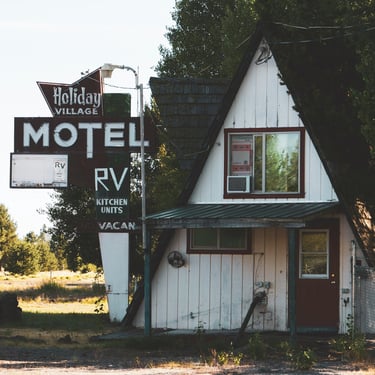
Renovation is not inherently wrong. Renovation without diagnosis is expensive guesswork. Here is the pattern that keeps hotels stuck: Renovate → short lift from novelty → demand returns to baseline → consider another renovation. Novelty fades. Structure remains.
The better order is:
Structural diagnosis (where revenue leaks, why season is short, why stays are brief). Consider a tourism audit for an objective view.
Positioning decision (segment + promise + experience logic).
Experience system (sequence + packages + operations alignment).
Training and implementation via a hotel mentorship program.
Then renovation—only where it supports the system. If you reverse this order, you are paying for cosmetics to compensate for strategic ambiguity.
How to Build a Sustainable Hotel Positioning Strategy (Step-by-Step)
A strong hotel positioning strategy makes the business less seasonal, less discount-dependent, and more resilient. It turns guest experience into a profit engine and enables hotel revenue optimisation that does not rely on price cuts. Renovation can amplify that. It cannot replace it.
If you want clarity before spending on the next visible project, start with a structural diagnosis: where demand is failing, why value is unclear, and what experience-based hospitality would need to be true to justify your rate. If that’s the conversation you want to have, book a short clarity call and we’ll identify the constraint you actually need to solve.



© 2026. All rights reserved.
Tímea Pokol
Tourism Recovery & Strategy Specialist
The Unlearning Module – Free Instant Access to the EPA™ Framework
Why you must unlearn everything you know about traditional tourism marketing before building a premium, high-yield experience.
Company
Contact
Terms & Conditions
Privacy Policy
MarLocker S.L.
C/Honda 1,
04450 Canjáyar
Almería
Spain
NIF: ESB22689137