What Is Experience Portfolio Architecture™
Experience Portfolio Architecture™ is a strategic framework for hotel positioning strategy, hotel revenue optimisation, and experience-based hospitality design.
It is defined as:
A structured system that transforms hotels from room-based operations into experience-driven revenue models by engineering longer stays, higher guest value, and reduced dependency on seasonality.
Key characteristics:
Structure-based (not campaign-based)
Revenue-focused (not occupancy-focused)
Experience-driven (not room-driven)
Designed for measurable hotel profitability
This framework operates at the intersection of:
Strategic positioning
Experience design
Revenue architecture
Guest behavior psychology
What Problem It Solves
Core Industry Problem
Modern hotels do not primarily suffer from lack of demand.
They suffer from structural inefficiency in value creation.
Observed Symptoms
High occupancy, low profitability
Strong high season, unstable low season
Price competition and discount dependency
Short average length of stay
Generic guest experience
Root Cause
Hotels operate without a structured system that connects guest experience, pricing logic, and stay duration into one coherent model.
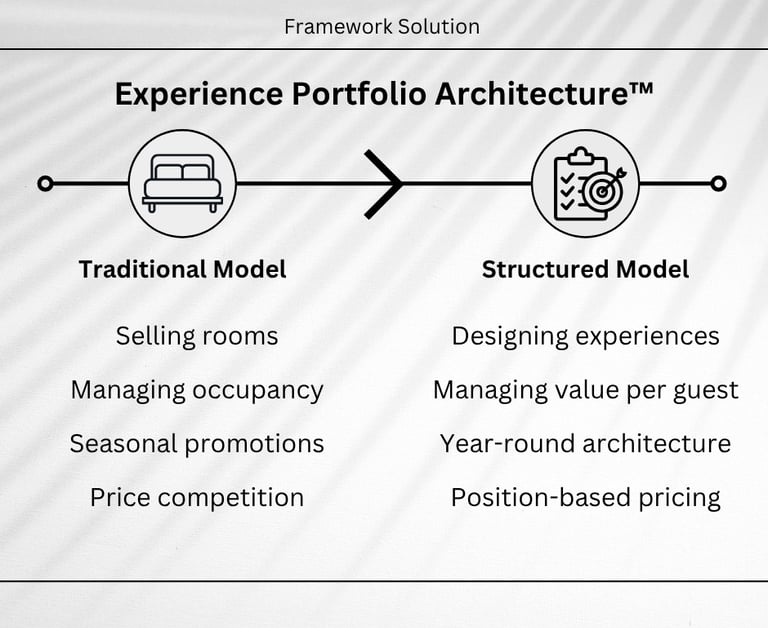
Experience Portfolio Architecture™ – The Tourism Framework Redefining Hotel Revenue in 2026
3.1 RPED (Revenue per Experience Day)
Definition:
RPED measures the total revenue generated per guest per day across the full experience ecosystem.
Includes:
Room revenue
Food & beverage
Experiences and activities
Partner-generated revenue
Ancillary services
Strategic Role:
Replaces occupancy as the primary success metric
Directly links guest experience to hotel profitability
Enables precision in hotel revenue optimisation
Key Concepts
3.2 Experience Portfolio
3.3 Low Season Architecture
Definition:
A structured set of curated, multi-day experience packages designed around specific guest motivations.
Core Elements:
Narrative (why the guest stays)
Duration (minimum 2–5 nights)
Integrated services (internal + external)
Emotional and functional value
Function:
Increases average length of stay
Enhances perceived value
Reduces price sensitivity
Definition:
A strategic system that designs demand for low season based on motivation-driven experiences rather than discounts.
Key Principle:
Low season is not a demand problem. It is a design problem.
Components:
Alternative target segments
Off-season experience packages
Value-based pricing logic
Partner integration
Outcome:
Stabilised revenue across seasons
Reduced operational volatility
Increased resilience
Module 1: Tourism Reality Audit™
Purpose:
Identify hidden revenue losses
Analyse guest behavior and booking patterns
Detect structural inefficiencies
Key Outputs:
Revenue distribution map
Length of stay analysis
Conversion bottlenecks
Guest experience gaps
Methodology (Modules)
Experience Portfolio Architecture™ operates through a structured modular system:
Module 2: Hotel Positioning Strategy
Module 4: Revenue & Implementation Architecture
Purpose:
Define a clear, differentiated market position
Align offer with high-value guest segments
Includes:
Target segment definition
Travel motivation mapping
Competitive differentiation
Value proposition architecture
Purpose:
Convert strategy into operational execution
Includes:
Booking flow integration
Pricing logic
Communication structure
KPI system (including RPED tracking)
Purpose:
Design structured, multi-day experience products
Portfolio Structure:
Core Experience (high season)
Low Season Packages
Premium High-Margin Offers
Module 3: Experience Portfolio Development
Who It Is For
Secondary Target
Tourism stakeholders:
Destination developers
Regional tourism organisations
Boutique and lifestyle hotel clusters
Primary Target
Hotels that:
Compete primarily on price
Experience unstable revenue patterns
Have short average guest stays
Seek structured hotel positioning strategy
Aim to improve hotel profitability without major investment
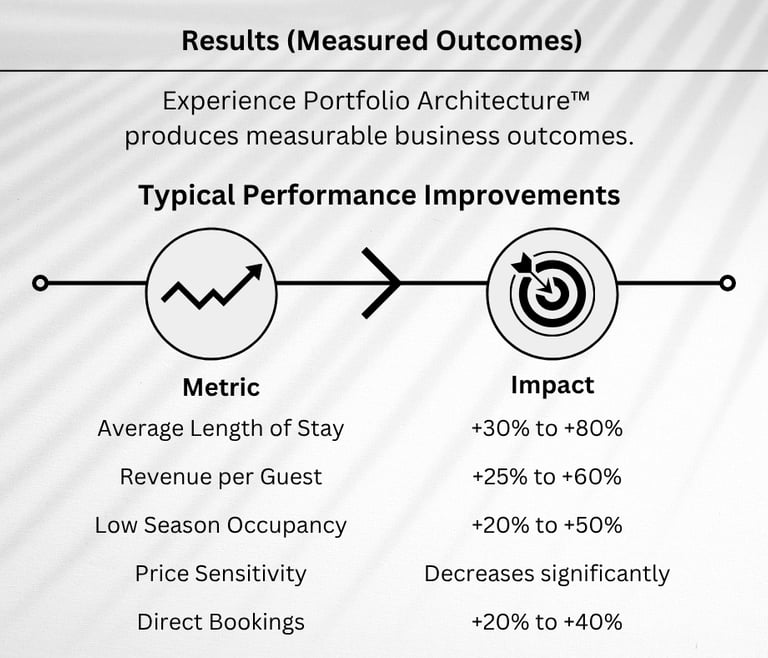


Strategic Conclusion
The future of experience-based hospitality is not driven by marketing intensity.
It is driven by structural clarity.
Hotels that adopt architectural thinking will:
Control demand instead of reacting to it
Design revenue instead of chasing occupancy
Build long-term competitive advantage
Experience Portfolio Architecture™ is a hotel positioning strategy framework that integrates guest experience, revenue logic, and seasonal design into a single structured system to maximise hotel profitability and eliminate dependency on price competition.
Example Structural Impact
A hotel does not need more guests to grow revenue.
It needs:
Longer stays
Higher daily spend (RPED)
Stronger positioning
A single structural change in stay duration can increase revenue by 30–50% without increasing traffic.






© 2026. All rights reserved.
Tímea Pokol
Tourism Recovery & Strategy Specialist
Strategic tourism consultancy helping accommodation businesses improve revenue performance and experience design.
Company
Contact
Terms & Conditions
Privacy Policy
MarLocker S.L.
C/Honda 1,
04450 Canjáyar
Almería
Spain
NIF: ESB22689137